How I Built Unshakable Balance by Sticking to the Same Daily Rhythm
Balance isn’t something you’re just born with—it’s built over time. I used to wobble getting off the couch, but now I can stand on one leg while brushing my teeth, no problem. The real game-changer? Not fancy exercises, but doing the same simple things every day, without fail. This isn’t about quick fixes. It’s about how routine regularity quietly rewires your body’s ability to stay steady, step after step, year after year. What began as a quiet personal experiment—showing up for just ten minutes each morning—has transformed not only how I move, but how I feel in my body. Stability, it turns out, is not a gift of youth. It’s a skill. And like any skill, it thrives on consistency.
The Hidden Crisis of Poor Balance (Even If You Don’t Know It)
Beyond strength and endurance, balance is one of the most underappreciated pillars of physical health. Often dismissed as a concern only for older adults, the reality is that balance begins to decline much earlier—typically in midlife, around the age of 40. This subtle erosion goes unnoticed because it happens gradually, like the slow dimming of a light. Yet, the consequences are real. According to research from the National Institute on Aging, poor balance is a leading contributor to falls, which are the top cause of injury-related hospitalizations among adults over 65. But even before that point, minor instability can affect daily life in quiet ways—catching yourself on a countertop, hesitating before stepping onto a moving sidewalk, or gripping the handrail a little tighter on the stairs.
The body’s balance system is a complex network involving vision, the inner ear (vestibular system), and sensory feedback from the feet and joints (proprioception). When any part of this system weakens, the brain struggles to integrate signals quickly enough to correct shifts in posture. This creates a growing gap between intention and action—like wanting to take a step but feeling a slight delay in your foot responding. The danger lies in how easily we adapt to these small failures. We don’t fall, so we assume we’re fine. But each near-miss is a warning sign that the body’s stability systems are not functioning at full capacity.
Consider everyday scenarios: stepping off a curb that’s slightly higher than expected, walking across a carpet with an uneven edge, or turning quickly while carrying a heavy bag. These are not extreme challenges, yet they require precise coordination between muscle, nerve, and brain. Without consistent training, the body becomes less adept at responding to such small disruptions. Over time, this increases the risk of missteps that could lead to injury. The good news is that balance is not fixed. It can be improved at any age. The key lies not in dramatic interventions, but in regular, mindful practice that keeps the system sharp.
Why Most People Get Balance Training Wrong
Many people approach balance improvement the same way they approach other health goals—with bursts of effort followed by long gaps. They might attend a yoga class once a week, try a balance exercise video after seeing a social media post, or do a few standing poses during a gym session. While these activities offer some benefit, they rarely lead to lasting change. The reason is simple: balance is not a muscle that strengthens with occasional use. It is a dynamic skill that depends on repetition, timing, and neural coordination. Sporadic practice does not provide the consistent input the brain needs to refine movement patterns.
A common misconception is that balance training is only for older adults or athletes. In truth, it is essential for everyone, especially those in their 30s, 40s, and 50s who are still active but may be unknowingly losing ground. Another myth is that complex movements—like standing on a wobble board or performing advanced yoga poses—are necessary for progress. In reality, the most effective balance exercises are often the simplest. What matters is not the difficulty of the movement, but the consistency with which it is performed. A five-minute daily routine done every morning will yield better results than a 30-minute session once a month.
Think of the body like a musical instrument. If you only play the piano once in a while, your fingers won’t remember the chords, and your timing will be off. But if you practice the same scales every day, even for a few minutes, your hands begin to move with precision and ease. The same principle applies to balance. The nervous system learns through repetition. When movements are repeated regularly, the brain forms stronger connections between sensory input and motor output. This is why isolated efforts fail—they don’t provide enough repetition to build lasting neural pathways. True improvement comes not from doing more, but from doing the same thing, right, every single day.
The Science Behind Routine Regularity and Neuroplasticity
At the heart of balance improvement is neuroplasticity—the brain’s ability to reorganize itself by forming new neural connections. For decades, scientists believed that the adult brain was largely fixed. Now, we know that the brain remains adaptable throughout life, especially when stimulated by consistent, purposeful activity. Balance training is a powerful trigger for neuroplastic change because it requires the brain to process multiple streams of sensory information in real time. Each time you shift your weight, stand on one leg, or walk heel-to-toe, your brain receives feedback from your muscles, joints, and inner ear. With repetition, it becomes faster and more accurate at interpreting these signals and coordinating your response.
Studies have shown that regular, low-intensity balance practice leads to measurable improvements in postural control and fall prevention. A 2019 review published in the journal Frontiers in Aging Neuroscience found that older adults who engaged in daily balance exercises for 12 weeks showed significant gains in stability and confidence during movement. Notably, the most effective programs were not those with high intensity or complex equipment, but those that emphasized frequency and consistency. Participants who practiced five to seven times per week saw better results than those who trained less frequently, even if the total time spent exercising was similar.
One reason frequency matters more than intensity is that balance relies heavily on muscle memory and proprioception—your body’s internal sense of where it is in space. These systems improve through repetition, not strain. When you perform the same movement daily, your nervous system begins to automate the process, reducing the cognitive load required to stay upright. This is why someone who walks the same path every day—like a gardener tending their yard—often develops excellent balance without formal training. Their body has learned the terrain through repeated exposure. The same effect can be achieved intentionally through a simple, structured routine.
The takeaway is clear: small, consistent actions create outsized results over time. You don’t need to push your limits to improve balance. You need to show up every day and do the basics well. This kind of training is not flashy, but it is profoundly effective. It works quietly, beneath the surface, rewiring your nervous system so that stability becomes second nature.
My Daily Balance-Boosting Routine (Simple, No Equipment Needed)
After years of feeling unsteady—especially when standing on one leg to put on pants or reaching for something on a high shelf—I decided to create a routine that was sustainable, not strenuous. I started with just ten minutes each morning, right after brushing my teeth. The entire sequence requires no equipment, takes up less space than a yoga mat, and can be done in socks or bare feet. Here’s what it looks like: first, I spend two minutes shifting my weight slowly from side to side, front to back, feeling my feet press into the floor. This activates the muscles in my ankles and feet and wakes up my proprioceptive system.
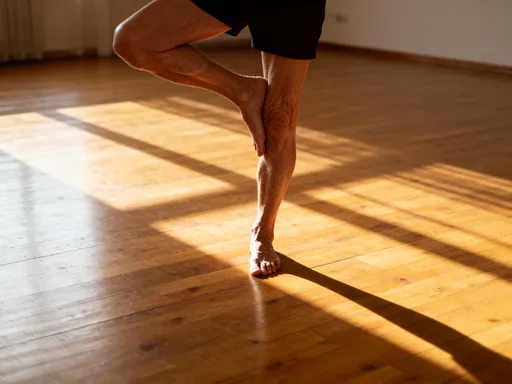
Next, I practice tandem standing—placing one foot directly in front of the other, heel to toe, arms at my sides. I hold this for 30 seconds on each side, focusing on keeping my gaze forward and my breathing steady. This challenges my vestibular system and improves alignment. Then, I do a slow heel-to-toe walk across the room, placing one foot directly in front of the other as if walking on a tightrope. I repeat this three times, using the wall for light support if needed. Finally, I finish with single-leg stands—30 seconds per leg, hands on hips, eyes open. If I wobble, I let myself reset and try again. The goal isn’t perfection; it’s practice.
The changes were subtle at first. In the first week, I noticed I was more aware of how I stood. By the second week, I could hold the tandem stand a little longer. By the end of the first month, I no longer grabbed the counter when stepping out of the shower. By three months, I could stand on one leg while brushing my teeth—something that once seemed impossible. The real breakthrough, however, was not in the exercises themselves, but in the habit. Doing the same routine at the same time every day—always after brushing my teeth—created a reliable cue. It became as automatic as washing my face. I didn’t have to decide whether to do it. I just did it.
How Environment Shapes Habit Persistence
One of the biggest obstacles to consistency is relying on willpower. Motivation fades. But habits, when properly designed, can endure. The key is to shape your environment so that the desired behavior becomes easy and natural. In my case, I placed two small colored tape markers on the floor—one for the tandem stand, one for the single-leg balance. Seeing them every morning served as a visual cue. I also paired the routine with an existing habit: brushing my teeth. This technique, known as habit stacking, leverages the power of routine to anchor new behaviors. Because I always brush my teeth in the morning, attaching the balance practice to that sequence made it more likely to stick.
Behavioral psychology shows that habits form more easily when they follow a simple pattern: cue, routine, reward. The cue is the trigger (brushing teeth), the routine is the behavior (balance exercises), and the reward is the positive feeling that follows (a sense of accomplishment, increased alertness). Over time, the brain begins to associate the cue with the reward, making the routine feel automatic. I also reduced friction by keeping the space clear and wearing comfortable clothes that allowed movement. I didn’t need to change outfits or clear furniture—everything was ready to go.
Another helpful strategy was to avoid overcomplicating the routine. I resisted the urge to add new exercises or increase duration too quickly. Staying with the same sequence reinforced the habit and allowed me to focus on form and consistency. When I traveled, I did a shortened version in my hotel room. The goal was not to do everything perfectly, but to maintain the rhythm. This flexibility, paradoxically, strengthened my commitment. I learned that missing a day wasn’t failure—it was part of the process. What mattered was returning to the routine the next day, without guilt or self-criticism.
Beyond Standing Still: Real-Life Benefits of Long-Term Balance Training
The benefits of daily balance practice extend far beyond the ability to stand on one leg. Over time, I noticed improvements in posture—standing taller, walking with more ease, and feeling more grounded during everyday tasks. My gait became smoother, and I no longer shuffled when carrying heavy grocery bags. Hiking on uneven trails, once a source of anxiety, became enjoyable again. I felt more confident navigating crowded sidewalks, stepping onto buses, and moving through busy spaces without fear of losing my footing.
Secondary gains included increased body awareness and reduced lower back discomfort. Because balance training engages the core, hips, and feet, it supports better alignment throughout the body. I found that my lower back pain—likely caused by years of sitting and poor posture—began to ease as my stabilizing muscles strengthened. I also became more mindful of how I moved: standing with even weight distribution, avoiding locking my knees, and engaging my core when lifting objects. These small adjustments, born from daily practice, added up to a more resilient, capable body.
Perhaps the most meaningful change was in my sense of independence. As we age, the fear of falling can quietly limit our choices—avoiding stairs, saying no to walks with friends, hesitating to travel. By building balance through daily practice, I reclaimed confidence in my ability to move freely. I no longer see myself as someone who needs to be careful. I see myself as someone who is strong, steady, and capable. This shift in mindset is not trivial. It affects how we engage with the world, how we age, and how we live. Stability is not just physical—it is emotional and psychological as well.
Sustainable Progress: How to Stay Consistent Without Burnout
Maintaining a daily routine for months or years requires more than discipline—it requires strategy. One of the most effective tools I used was tracking progress in a simple way. Every few weeks, I recorded a short video of myself doing the single-leg stand. Watching the footage over time revealed subtle improvements: less wobbling, better posture, longer hold times. I also kept a brief journal, noting how I felt each day—energized, tired, unsteady—and how that affected my practice. This helped me recognize patterns and adjust without judgment.
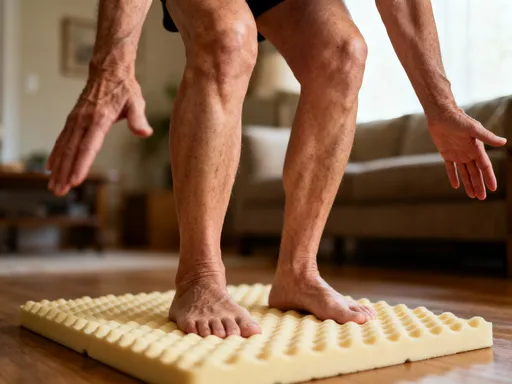
To prevent boredom, I introduced gentle variations while keeping the core routine intact. For example, I occasionally closed my eyes during the single-leg stand (only when safe) to challenge my vestibular system. I experimented with standing on a folded towel to simulate uneven surfaces. But I always returned to the basics. The goal was not novelty, but mastery through repetition. I also reminded myself that progress is not linear. Some days were harder than others—due to fatigue, stress, or minor illness—and that was okay. The practice wasn’t about achieving a perfect performance every day. It was about showing up.
Patience was essential. True balance improvement takes months, not days. There were times I questioned whether I was making progress, especially in the early weeks when changes were imperceptible. But I trusted the process, knowing that small efforts compound over time. I also consulted with a physical therapist to ensure my form was correct and to rule out any underlying conditions. For anyone with medical concerns—such as vertigo, joint pain, or neurological issues—professional guidance is strongly recommended before beginning a balance routine. Safety always comes first.
True balance isn’t achieved through isolated efforts but through the quiet power of daily repetition. By aligning small actions with long-term consistency, anyone can build a more stable, resilient body—one that moves with confidence, no matter the decade. The real secret wasn’t doing more. It was doing the same thing, right, every single day.