Lost in Time: Hallstatt’s Hidden Architectural Gems That Stole My Heart
Nestled between misty mountains and a mirror-like lake, Hallstatt, Austria, feels like stepping into a fairy tale. Its cobblestone paths lead to centuries-old buildings frozen in time, each with stories etched into wooden facades and alpine rooftops. I came for the views but stayed for the soul of this village—where every landmark building whispers history. This is not just travel; it’s discovery at its most intimate. More than a postcard-perfect destination, Hallstatt offers a rare window into how architecture, nature, and human resilience intertwine across generations. Here, beauty is not staged—it is lived.
First Glimpse: Arriving in Hallstatt – A Scene from a Dream
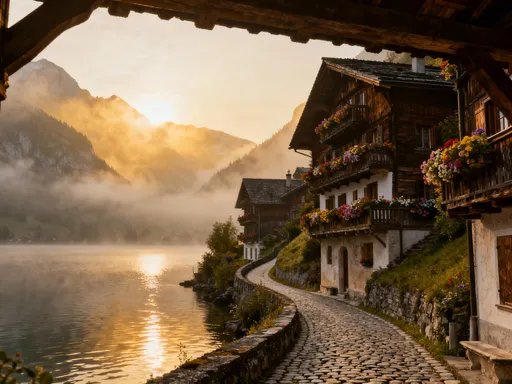
Approaching Hallstatt for the first time is an experience that lingers long after the journey ends. Whether arriving by a quiet ferry gliding across Hallstätter See or stepping off the narrow-gauge train that winds through the Salzkammergut region, the village reveals itself like a painting slowly unveiled. The moment the spire of the Catholic Church of the Assumption appears through the morning mist, framed by steep forested slopes and the glassy surface of the lake, time seems to pause. Houses cling to the mountainside in a cascade of pastel hues—soft yellows, warm reds, and weathered grays—their wide eaves jutting over narrow lanes, protecting doorways from snow and rain as they have for hundreds of years.
There is no grand entrance to Hallstatt, no sprawling plaza to announce arrival. Instead, visitors step directly onto cobbled paths worn smooth by centuries of footsteps. The absence of cars enhances the sense of stepping into another era. Only foot traffic and the occasional service boat break the stillness. This deliberate slowness shapes the visitor’s experience, inviting contemplation rather than haste. Every angle offers a new composition: a balcony overflowing with red geraniums, a wooden door carved with alpine motifs, or the shimmering reflection of rooftops in the lake below. It is a village designed not for spectacle, but for harmony—with nature, with history, and with daily life.
What makes this first impression so powerful is not just the visual beauty, but the authenticity. Unlike reconstructed heritage sites, Hallstatt is not a museum frozen in time. It is a living community where families raise children, shopkeepers open their doors each morning, and fishermen still cast lines from wooden docks. This blend of continuity and charm sets the stage for a deeper exploration of the village’s architectural soul—one that reveals itself not in grand gestures, but in quiet details.
The Church of the Assumption: Where History Stands Tall
Rising above the Hallstatt skyline, the Church of the Assumption is both a spiritual anchor and an architectural testament to endurance. Originally built in the 12th century and later rebuilt in Baroque style during the 18th century, its white facade and tall spire dominate the upper village, visible from nearly every vantage point. The climb to its entrance—up a long stone staircase flanked by the village cemetery—feels like a pilgrimage. Each step brings not only a change in elevation but a deepening sense of connection to the past. The churchyard, with its orderly rows of weathered tombstones, offers panoramic views of the lake and surrounding peaks, but it is what lies beneath that holds one of Hallstatt’s most haunting treasures: the ossuary, or bone house.
Within this small chamber, over 1,200 painted skulls rest in quiet dignity. Due to limited burial space in the mountainous terrain, a centuries-old tradition developed: after a decade in the ground, remains were exhumed, cleaned, and stored in the ossuary. Each skull was then painted with the individual’s name, dates, and often a floral or symbolic design. While this practice may seem unusual to modern sensibilities, it reflects a profound cultural respect for the dead—a way of honoring ancestors without erasing their presence from daily life. The care and artistry in these decorations speak of a community that values memory and continuity.
Inside the church, the Baroque interior unfolds in a symphony of gilded woodwork, frescoed ceilings, and warm candlelight. The altar, carved with intricate religious scenes, draws the eye upward, emphasizing the sacred space. Yet, what is most striking is not the ornamentation, but the sense of resilience. The church has withstood floods, fires, and the passage of time, each restoration carefully preserving its historical character. Today, it remains an active place of worship, where Sunday Mass is still attended by locals in traditional dress. This continuity—of faith, of architecture, of community—makes the Church of the Assumption more than a landmark. It is a living bridge between past and present, where every stone and beam carries the weight of centuries.
The Old Town’s Timbered Treasures: Walking Through Centuries
Wandering through Hallstatt’s old town is like walking through an open-air archive of alpine architecture. The narrow lanes—some so tight that neighbors could almost shake hands across the gap—are lined with buildings dating from the 16th to the 18th century. These timber-framed houses, with their steeply pitched roofs and wide overhanging eaves, were designed not for beauty alone, but for survival in a harsh mountain climate. The deep eaves protect walls and doorways from heavy snow and rain, while the wooden frames, filled with brick or plaster, provide insulation against freezing winters. Balconies, often overflowing with vibrant flowers in summer, serve both aesthetic and practical purposes—allowing residents to dry herbs, store firewood, or simply enjoy views of the lake.
Each building tells a story through its details. Carved lintels bear family initials or protective symbols, some dating back to the 1500s. Colorful shutters, traditionally painted in shades of green or blue, were once believed to ward off evil spirits—a blend of superstition and craftsmanship. Doorways, often slightly recessed, create intimate thresholds between public and private life. What is remarkable is how little has changed. Strict preservation laws, enforced since Hallstatt became a UNESCO World Heritage Site in 1997, ensure that no modern materials, signage, or architectural alterations disrupt the historic fabric. Repairs must use traditional techniques and locally sourced wood, maintaining the village’s authenticity.
This commitment to preservation transforms the entire town center into a living museum of vernacular design. Unlike staged heritage villages, Hallstatt’s architecture is not curated for tourists—it is part of everyday life. A centuries-old house may now house a café, but its structure remains unchanged. A shop selling handmade ceramics operates from a building that once stored salt barrels. These quiet integrations of old and new demonstrate a deep respect for continuity. For the visitor, it offers a rare opportunity to experience history not as a distant concept, but as a lived reality—where the past is not preserved behind glass, but lived behind wooden doors.
The Protestant Church and Market Square: Harmony in Contrast
Just a short walk from the Catholic Church of the Assumption, nestled near the central market square, stands the modest yet graceful Protestant Church. Built in the 18th century during a period of religious tolerance, it reflects the quiet coexistence of faiths in Hallstatt. Unlike the ornate Baroque grandeur of its Catholic counterpart, the Protestant church features a simple steeple, clean lines, and a restrained interior—wooden pews, a plain pulpit, and soft natural light filtering through clear glass windows. This architectural humility mirrors the values of its congregation: simplicity, introspection, and community.
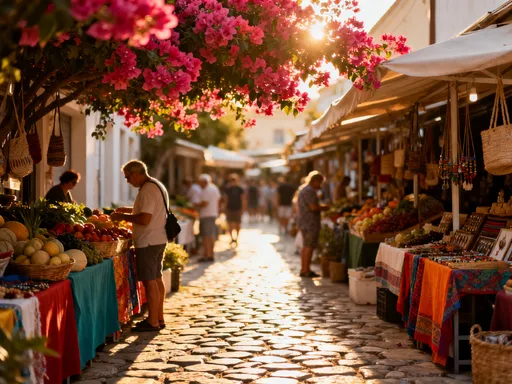
The surrounding market square, though small, serves as the social heart of the village. Framed by historic townhouses with flower boxes and wooden awnings, it hosts a weekly farmers’ market where locals sell fresh cheese, honey, and seasonal produce. Benches invite conversation; children chase each other between stalls; elders sit and watch the world pass by. There are no grand monuments here, no dramatic fountains—just a space shaped by daily life. Yet, its architectural harmony is undeniable. The buildings, though centuries old, have been carefully maintained to preserve their original proportions and materials. The square’s scale—intimate and human-centered—encourages connection rather than spectacle.
This area exemplifies Hallstatt’s ability to balance tradition with community vitality. While the Catholic Church overlooks the village from above, the Protestant Church and market square are grounded in the rhythm of everyday existence. Together, they represent two facets of Hallstatt’s identity: spiritual depth and social warmth. The contrast in architectural style is not a division, but a dialogue—one that reflects the village’s broader commitment to harmony. In a world where historic towns often become tourist enclaves, Hallstatt’s market square remains a place where locals gather, trade, and belong. It is a reminder that true preservation is not just about saving buildings, but about sustaining the life within them.
Salt Mines and Hidden Foundations: The Underground Architecture
Beneath Hallstatt’s picturesque surface lies a deeper foundation—both literally and historically. The village’s existence for over 7,000 years is rooted in salt, one of the most valuable commodities of the ancient world. Known as “white gold,” salt shaped Hallstatt’s economy, culture, and even its name—derived from “Hall,” meaning salt, and “statt,” meaning place. The nearby Salzwelten salt mine, accessible today through guided tours, offers a rare glimpse into this subterranean world where early miners carved tunnels deep into the mountain using primitive tools.
The journey into the mine begins with a steep funicular ride up the mountainside, followed by a walk through cool, dimly lit tunnels. Inside, the architecture is functional but awe-inspiring: wooden ladders, some over a thousand years old, still in place; hand-carved steps leading down into darkness; and vast chambers where salt was extracted by candlelight. One of the most striking features is the underground lake, its still black waters reflecting the flicker of lanterns. Visitors slide down a 64-meter wooden chute—a tradition dating back to miner transport—adding a touch of adventure to the experience.
What makes the mine more than a tourist attraction is its role as a cultural archive. Archaeologists have uncovered tools, textiles, and even human remains, offering insights into early alpine life. The well-preserved miner boots, dating back to 1100 BCE, are among the oldest footwear ever found. These discoveries underscore how salt mining was not just an industry, but a way of life—one that demanded ingenuity, endurance, and community cooperation. Today, the mine is both a heritage site and an educational experience, where families and travelers learn about Hallstatt’s origins. Its underground architecture, though utilitarian, stands as a monument to human resilience and the quiet strength of those who built their lives beneath the mountain.
Riverside Residences and Lakeside Charm: Design Meets Nature
One of Hallstatt’s most striking architectural feats is how its buildings coexist with the challenging terrain. Perched along the narrow strip of land between steep cliffs and the lake, homes are built on wooden pilings, terraced into the hillside, or anchored directly into rock. This intimate relationship with nature has shaped every aspect of design. Houses are narrow and tall, maximizing limited space. Roofs are steeply pitched to shed snow efficiently, and materials—wood, stone, and slate—are sourced locally, ensuring harmony with the surrounding landscape.
Seasonal changes reveal the adaptability of this architecture. In winter, snow blankets rooftops in soft mounds, the eaves protecting walls from ice buildup. Smoke curls from chimneys as families gather around stoves. In summer, the transformation is equally dramatic—balconies burst with red geraniums, boats bob at private docks, and sunlight dances across whitewashed walls. Even the colors of the houses—chosen historically to reflect sunlight and reduce heat absorption—now contribute to the village’s iconic charm.
What is most remarkable is how these homes remain lived-in. Unlike many historic villages turned into tourist zones, Hallstatt’s residents continue to occupy these centuries-old structures. A grandmother waters her flowers from a third-floor balcony; a fisherman repairs his nets on a wooden dock; children play on the path behind their family home. This continuity ensures that the architecture is not a static display, but a dynamic part of daily life. The relationship between design and nature is not one of conquest, but of negotiation—a quiet partnership that has endured for generations.
Preservation in the Age of Tourism: Protecting Hallstatt’s Soul
In recent years, Hallstatt has become a global phenomenon, drawing hundreds of thousands of visitors annually. Its image appears on travel brochures, social media feeds, and even inspired the floating mountains in the film *Avatar*. While this attention brings economic benefits, it also poses challenges to the village’s integrity. Overcrowding, noise, and the risk of commercialization threaten the very qualities that make Hallstatt special. In response, local authorities have implemented thoughtful measures to protect its soul.
Pedestrianization has been key—private vehicles are restricted, with parking located outside the center. Day-trippers are encouraged to arrive by ferry or train, reducing traffic and pollution. In peak seasons, visitor numbers are informally managed through timed entry suggestions and guided tour coordination. Local businesses, from bakeries to craft shops, are prioritized over chain franchises, ensuring that commerce remains rooted in community. Most importantly, preservation laws continue to enforce strict guidelines on construction, renovation, and signage, preventing visual clutter or architectural discord.
These efforts reflect a broader philosophy: that heritage is not just about saving old buildings, but about sustaining a way of life. Hallstatt’s landmark structures are not preserved as relics, but as homes, workplaces, and places of worship. A shop selling handmade lace operates from a 17th-century house; a family-run guesthouse welcomes travelers in a building that has hosted guests for generations. This integration of past and present ensures that the village remains authentic, not performative.
For visitors, this means an invitation to engage respectfully. Rather than rushing through for a photo, the true experience of Hallstatt unfolds slowly—over a cup of coffee at a lakeside café, a quiet walk through the cemetery, or a conversation with a local artisan. It is in these moments that the village reveals its deeper magic: not in perfection, but in continuity.
More Than Postcards – Why Hallstatt’s Architecture Lives On
Hallstatt’s enduring appeal lies not in its postcard perfection, but in its quiet authenticity. Its architecture does not shout for attention; it whispers stories of resilience, adaptation, and harmony. Every beam, every stone, every reflection in the lake carries the weight of centuries—not as a burden, but as a legacy. This is a place where history is not frozen, but flowing—through the hands of craftsmen, the footsteps of residents, and the reverence of visitors.
The true value of Hallstatt lies in what it teaches about sustainable living, cultural continuity, and the beauty of simplicity. In an age of rapid change, it stands as a reminder that some things are worth preserving not for nostalgia, but for their enduring wisdom. The wide eaves that shield homes from snow, the wooden ladders that connect generations in the mine, the painted skulls that honor the dead—these are not curiosities, but testaments to a way of life that values balance, respect, and connection.
To discover Hallstatt is to learn to see more deeply. It is to understand that architecture is not just about form, but about function, memory, and community. It invites us to slow down, to listen, and to appreciate the quiet beauty of continuity. In doing so, we do not merely visit a village—we become part of its ongoing story, however briefly. And in that fleeting connection, we carry forward its most precious lesson: that the soul of a place is not in its stones, but in the lives it sustains.